When water damage strikes your home or business, every minute counts. Whether it’s a burst pipe, storm flooding, or an appliance failure, knowing what type of service you need—water mitigation or water damage restoration—can save you time, money, and stress.
At Rellim Contracting, we frequently hear homeowners use these terms interchangeably. While they are closely related, water mitigation and water damage restoration are not the same, and understanding the difference can help you respond faster and protect your property.
In this guide, we’ll break down:
-
The key differences between water mitigation and water damage restoration
-
Why water mitigation is the critical first step
-
When restoration comes into play
-
How professional services protect your home and health
-
Why acting quickly matters, especially in Alabama’s climate
What Is Water Mitigation?
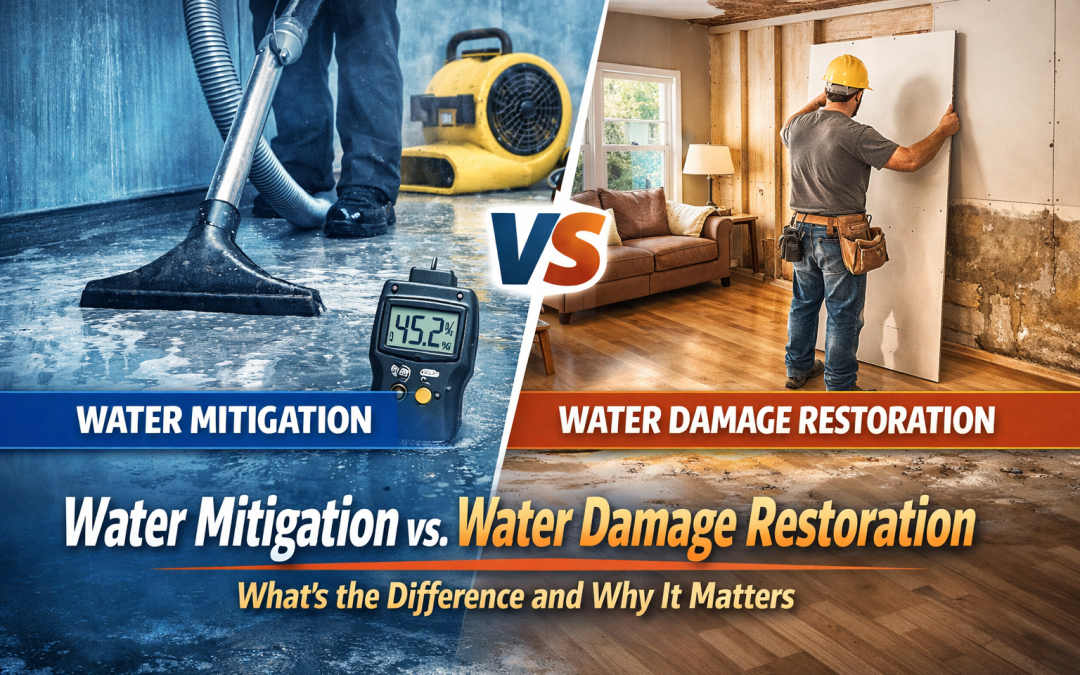
Water mitigation refers to the immediate actions taken to prevent further water damage after a water intrusion event. The goal is not to fix or rebuild yet—but to stop the damage from spreading.
Common Water Mitigation Services Include:
-
Emergency water extraction
-
Stopping the water source (leaks, burst pipes, appliance failures)
-
Structural drying using industrial dehumidifiers and air movers
-
Moisture detection using infrared cameras
-
Initial mold prevention treatments
Water mitigation is all about damage control. The faster mitigation begins, the less extensive (and expensive) restoration will be later.
According to the EPA, mold can begin growing within 24–48 hours of water exposure, making immediate mitigation essential.
🔗 External reference: https://www.epa.gov/mold
What Is Water Damage Restoration?
Water damage restoration is the repair and rebuilding phase that occurs after mitigation is complete. Once the property is dry, stable, and safe, restoration focuses on returning the structure to its pre-damage condition—or better.
Water Damage Restoration Services Often Include:
-
Replacing drywall, insulation, and flooring
-
Repairing structural components
-
Painting and finishing work
-
Cabinet and trim replacement
-
Full rebuilds after severe flooding
In short, mitigation stops the damage, while restoration fixes what was damaged.
Water Mitigation vs. Water Damage Restoration: The Key Differences
| Feature | Water Mitigation | Water Damage Restoration |
|---|---|---|
| Purpose | Prevent further damage | Repair and rebuild |
| Timing | Immediate (emergency response) | After mitigation |
| Focus | Drying and stabilization | Reconstruction |
| Mold Prevention | Yes | After remediation |
| Cost Impact | Reduces total cost | Depends on damage level |
Skipping or delaying mitigation often leads to higher restoration costs, more extensive repairs, and greater health risks.
Why Water Mitigation Should Always Come First
Many homeowners want to jump straight to repairs—but without mitigation, restoration efforts can fail.
Here’s Why Mitigation Matters:
-
Hidden moisture can remain behind walls and floors
-
Wet materials weaken structural integrity
-
Mold growth can spread unnoticed
-
Insurance claims may be denied due to delayed action
At Rellim Contracting, our water mitigation team uses professional-grade drying equipment and moisture detection tools to ensure no water is left behind before restoration begins.
🔗 Internal link example:
Learn more about our process on our Water Mitigation Services page:
https://rellimcontracting.com/water-mitigation/
Common Situations That Require Water Mitigation
If you experience any of the following, you should call a water mitigation professional immediately:
-
Burst or leaking pipes
-
Storm or flood damage
-
Roof leaks
-
Overflowing toilets or sinks
-
Appliance failures (washing machines, water heaters)
Homes in Alabama, particularly in areas like Mobile, Baldwin County, and surrounding Gulf Coast communities, are especially vulnerable due to heavy rainfall, hurricanes, and high humidity.
Local expertise matters when dealing with moisture-heavy environments.
The Role of Mold Prevention in Water Mitigation
One of the most critical reasons for water mitigation is mold prevention.
Mold spores are always present in the air. When moisture is introduced, they multiply rapidly. Once mold spreads, restoration becomes far more complex and expensive.
The CDC warns that mold exposure can cause respiratory issues, allergic reactions, and worsen asthma symptoms.
🔗 External reference: https://www.cdc.gov/mold
By addressing water damage immediately, mitigation drastically reduces the risk of mold growth.
How Water Mitigation and Restoration Work Together
Think of mitigation and restoration as two phases of one complete recovery process:
-
Mitigation Phase
-
Stop water intrusion
-
Remove standing water
-
Dry and stabilize the structure
-
-
Restoration Phase
-
Repair damaged materials
-
Restore aesthetics and functionality
-
Return property to pre-loss condition
-
At Rellim Contracting, we handle both phases, ensuring a seamless transition from emergency response to full restoration.
Insurance Considerations: Why the Difference Matters
Insurance companies often distinguish between mitigation and restoration.
Important Insurance Facts:
-
Most policies require immediate mitigation to minimize loss
-
Delayed action can result in denied or reduced claims
-
Documentation during mitigation supports restoration claims
Our team works with homeowners to document damage and provide detailed reports that insurance companies require.
Why Choose a Local Water Mitigation Company in Alabama?
Hiring a local contractor like Rellim Contracting provides several advantages:
-
Faster emergency response times
-
Knowledge of local weather patterns and flood risks
-
Experience with Alabama building materials and codes
-
Trusted reputation within the community
When water damage happens, you don’t want to wait hours—or days—for help.
Final Thoughts: Knowing the Difference Can Save Your Property
Understanding the difference between water mitigation and water damage restoration empowers you to act quickly and make informed decisions.
-
Mitigation stops the damage
-
Restoration repairs the damage
-
Both are essential—but mitigation must come first
If your home or business has experienced water damage, don’t wait. Early action can prevent mold, reduce repair costs, and protect your property’s value.
Call Rellim Contracting for Professional Water Mitigation Services
If you’re dealing with water damage in Mobile, AL or surrounding areas, trust Rellim Contracting for fast, professional water mitigation and restoration services.
🔗 Visit: https://rellimcontracting.com
🔗 Water Mitigation Services: https://rellimcontracting.com/water-mitigation/