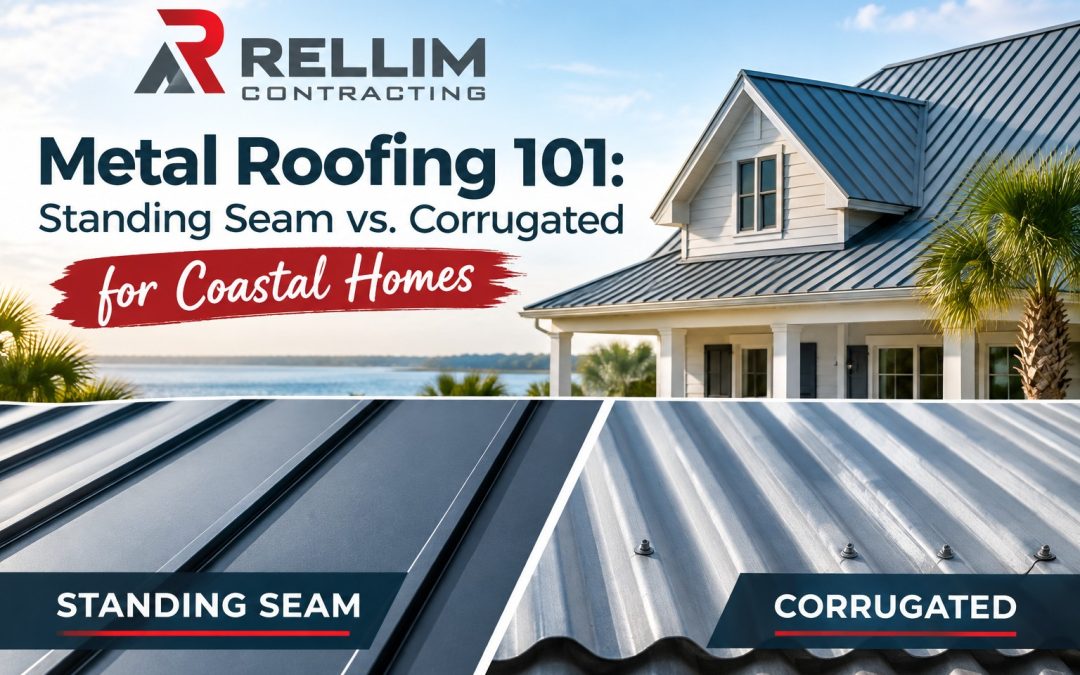
Metal Roofing 101: Standing Seam vs. Corrugated for Coastal Homes
Standing seam metal roofing and corrugated metal panels are both popular choices for Mobile, AL homeowners. Both hold up better than asphalt shingles in salt air and high wind. But they perform very differently once a storm rolls in.
Here’s how the two systems compare, and how to pick the right one for your coastal home.
What Is Standing Seam Metal Roofing?
Standing seam metal roofing uses long, vertical panels with raised seams that interlock at the edges. The fasteners are hidden underneath the seam, not exposed to weather. That design gives the roof a clean, modern look and a tighter seal against wind-driven rain.
This hidden-fastener system is one reason standing seam performs so well near the water.
What Is Corrugated Metal Roofing?
Corrugated metal roofing uses wavy, ridged panels attached with exposed screws or fasteners. It costs less than standing seam and installs faster. You’ll often see it on barns, sheds, and budget-conscious residential projects.
The trade-off is durability. Exposed fasteners can loosen over time and become entry points for water.
Standing Seam vs. Corrugated: Performance on the Gulf Coast
Wind and water resistance matter most for coastal roofs. Here’s how the two systems stack up:
- Wind rating: Standing seam systems can be engineered for wind uplift ratings well above 150 mph. Corrugated panels typically top out in the 120–140 mph range.
- Lifespan: Standing seam roofs often last 40 to 70 years. Corrugated panels typically last 30 to 50 years.
- Leak resistance: Hidden fasteners on standing seam roofs reduce potential leak points. Exposed fasteners on corrugated panels need more frequent inspection and resealing.
- Appearance: Standing seam offers a sleek, architectural look. Corrugated has a more industrial, utilitarian appearance.
According to McElroy Metal’s guide to coastal metal roofing, concealed fasteners and continuous panel engagement are two of the biggest reasons standing seam systems are preferred for high-wind, salt-air environments.
Curious how metal stacks up against asphalt shingles too? We covered that comparison in our guide to asphalt shingles vs. metal roofing.
Cost Differences Between the Two Systems
Corrugated metal roofing costs less upfront. It’s a reasonable option for outbuildings, garages, or homeowners on a tighter budget.
Standing seam costs more to install, but the higher upfront investment often pays off. A longer lifespan and better wind and water resistance mean fewer repairs down the road, especially in a storm-prone market like Mobile.
Why Coastal Homes Need Extra Protection
Mobile’s salt air speeds up corrosion on any exposed metal, including fasteners. We’ve seen this firsthand with clients along the coast. Our post on how salt air shortens your roof’s lifespan breaks down exactly what that exposure does over time.
Standing seam’s concealed fasteners hold up better against this kind of long-term salt exposure than corrugated’s exposed screws.
Which Option Is Right for Your Home?
Choosing between standing seam and corrugated comes down to budget, building type, and how much wind exposure your property faces. A licensed roofing contractor in Mobile, AL can walk your roof and recommend the system that fits your home and budget.
Rellim Contracting installs both residential roofing systems built for Gulf Coast weather. We’ll help you weigh the upfront cost against long-term performance before you commit.
Ready to talk metal roofing options? Contact Rellim Contracting today for a free consultation.