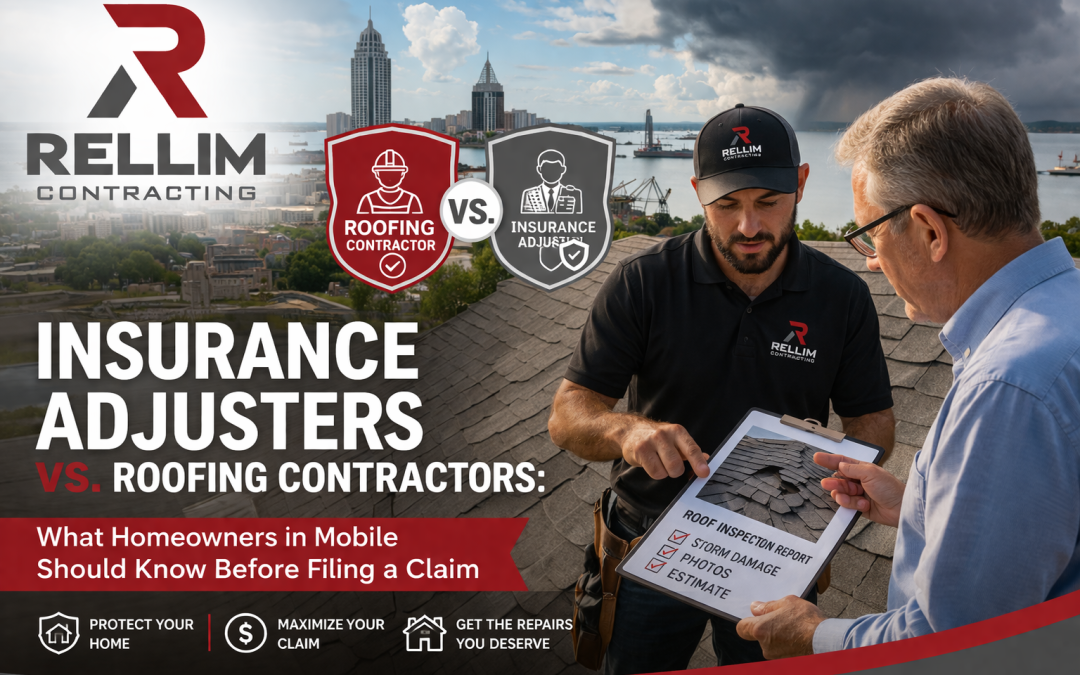
Insurance Adjusters vs. Roofing Contractors: What Homeowners in Mobile Should Know Before Filing a Claim
If your home in Mobile, Alabama has recently experienced storm damage, you may be wondering who to call first—your insurance company or a roofing contractor. Understanding the difference between these two roles is critical to protecting your home and ensuring you receive the compensation you deserve.
In this guide, we’ll break down insurance adjusters vs roofing contractors in Mobile AL, explain how each one works, and help you avoid costly mistakes before filing a claim.
Why This Matters in Mobile, AL
Mobile homeowners deal with unique weather challenges, including:
- Hurricanes
- Heavy rain
- High humidity
- Strong coastal winds
According to the National Oceanic and Atmospheric Administration (NOAA), Gulf Coast regions are among the most storm-prone in the U.S. That means even small roof issues can quickly turn into major damage.
Filing an insurance claim without proper guidance can result in:
- Underpaid claims
- Denied coverage
- Missed hidden damage
- Higher long-term repair costs
What Does an Insurance Adjuster Do?
An insurance adjuster is responsible for evaluating your claim on behalf of the insurance company.
Their role includes:
- Inspecting visible roof damage
- Determining if the damage is covered
- Estimating repair costs
- Issuing a claim decision
While adjusters play an important role, it’s important to understand they work for the insurance company—not for you.
For a deeper understanding of how claims work, visit the Insurance Information Institute.
What Does a Roofing Contractor Do?
A roofing contractor works directly for you and focuses on identifying and repairing damage to your home.
A professional contractor will:
- Perform a full roof inspection
- Identify both visible and hidden damage
- Provide a detailed repair estimate
- Assist with documentation for your claim
If you’re in Mobile, you can learn more about professional inspections through Rellim Contracting’s roofing services.
Insurance Adjusters vs Roofing Contractors: Key Differences
Understanding these differences helps you make smarter decisions.
Who They Work For
- Insurance Adjuster: Insurance company
- Roofing Contractor: Homeowner
Primary Goal
- Adjuster: Minimize claim payout within policy limits
- Contractor: Ensure all damage is properly identified and repaired
Inspection Quality
- Adjuster: Basic, often limited in time
- Contractor: Detailed and thorough
Outcome
- Adjuster: Claim approval and payment estimate
- Contractor: Repair plan and execution
Why You Should Call a Roofing Contractor First
Before filing a claim, it’s always best to have your roof inspected by a professional.
1. Avoid Unnecessary Claims
Not all damage qualifies for insurance coverage. Filing a claim unnecessarily can increase your premiums.
2. Identify Hidden Damage
Roof damage isn’t always visible. Issues like water intrusion can lead to mold, requiring services like mold remediation if left untreated.
3. Strengthen Your Claim
A contractor provides:
- Photos
- Inspection reports
- Accurate estimates
This documentation helps ensure your claim is taken seriously.
Common Mistakes Homeowners Make
Filing Too Quickly
Jumping straight to insurance without an inspection can backfire.
Accepting the First Estimate
Insurance estimates may not reflect the full scope of repairs.
Waiting Too Long
In Mobile’s humid climate, delays can lead to:
- Mold growth
- Wood rot
- Structural damage
The Alabama Department of Insurance explains that homeowners are responsible for preventing further damage after a loss.
Step-by-Step: How to Handle a Roof Insurance Claim
Step 1: Schedule an Inspection
Start with a trusted local contractor like Rellim Contracting.
Step 2: Review the Damage
Determine whether the damage is:
- Storm-related
- Covered under your policy
Step 3: File Your Claim
Provide:
- Photos
- Inspection report
- Contractor estimate
Step 4: Meet the Adjuster
If possible, have your contractor present during the inspection to ensure nothing is missed.
Step 5: Compare Estimates
Review the insurance payout versus your contractor’s estimate and negotiate if needed.
Signs Your Roof May Have Storm Damage
Watch for these common indicators:
- Missing or lifted shingles
- Water stains on ceilings
- Granule loss
- Sagging areas
- Musty odors or mold
If you notice any of these, it’s time to schedule an inspection.
Why Local Experience Matters
Hiring a local contractor in Mobile makes a difference. They understand:
- Regional weather patterns
- Common roofing issues in coastal areas
- Local building codes and materials
This expertise ensures your repairs are built to last.
How Rellim Contracting Helps
At Rellim Contracting, homeowners get more than just repairs—they get guidance through the entire process.
Services include:
- Roof inspections
- Storm damage assessments
- Insurance claim assistance
- High-quality repairs
Their team understands the challenges Mobile homeowners face and provides solutions tailored to the Gulf Coast environment.
Final Thoughts
When it comes to insurance adjusters vs roofing contractors in Mobile AL, the best approach is clear:
👉 Always start with a trusted roofing contractor before filing a claim.
This ensures:
- Accurate damage assessment
- Stronger insurance claims
- Proper, long-lasting repairs
Need a Roof Inspection in Mobile?
If your home has experienced storm damage or you want peace of mind before filing a claim, schedule an inspection today:
👉 Contact Rellim Contracting
Taking action now can save you time, money, and stress later.