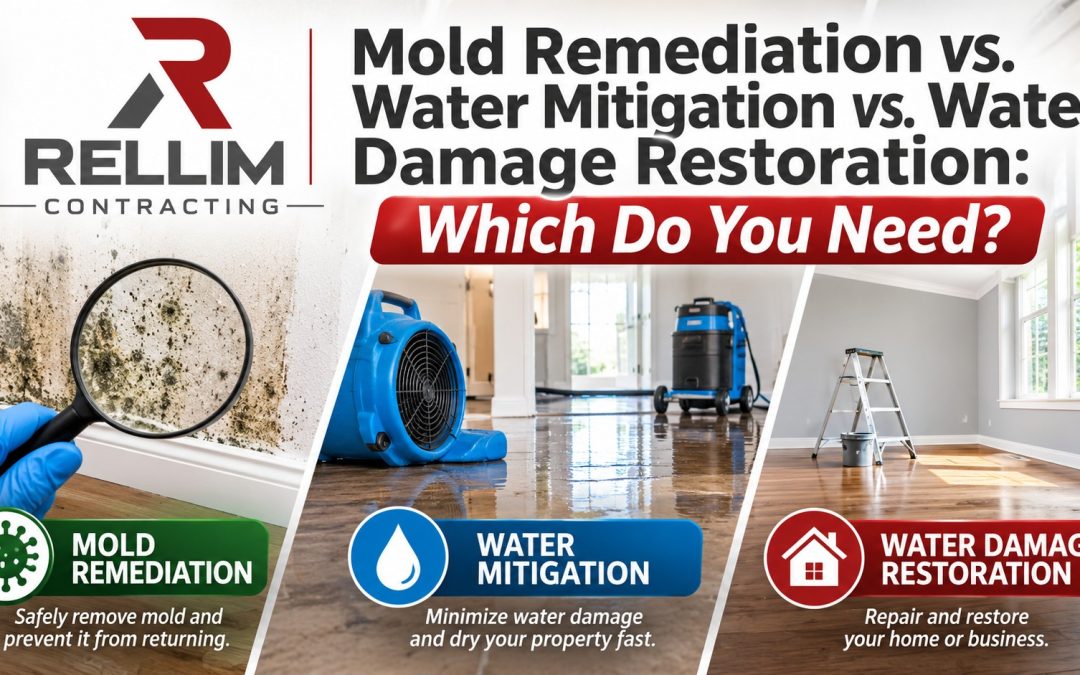
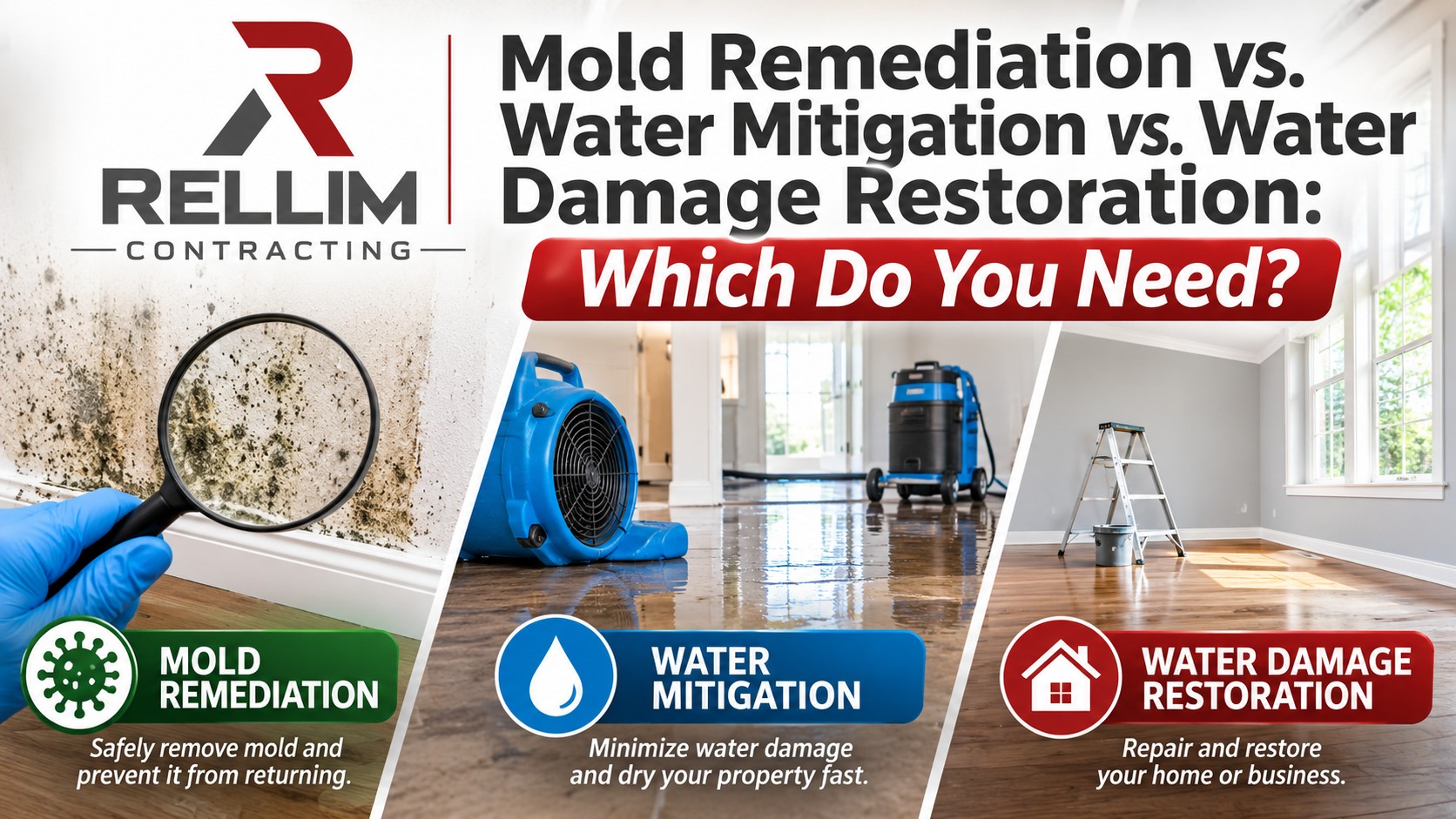
Mold Remediation vs Water Mitigation vs Water Damage Restoration: Which Do You Need?
Water damage is stressful enough. Calling the wrong service makes it worse. Understanding mold remediation vs water mitigation vs water damage restoration helps you act fast and spend wisely. Here is how each service works, and when Mobile, AL homeowners need it.
What Is Water Mitigation?
Water mitigation is the emergency response. Its goal is to stop damage from spreading. First, technicians find and stop the water source. Next, they remove standing water with pumps and extractors. Then they run dehumidifiers and air movers to dry the structure.
Speed matters here. According to EPA mold cleanup guidance, you should dry water-damaged areas within 24 to 48 hours to prevent mold growth. Therefore, mitigation should start the same day whenever possible.
What Is Water Damage Restoration?
Restoration comes after mitigation. It rebuilds what the water damaged. For example, crews replace wet drywall, insulation, flooring, and paint. As a result, your home returns to its pre-loss condition.
Restoration can also include ceilings, trim, and cabinetry. Meanwhile, thorough documentation of the work supports your insurance claim. For a deeper look at these two services, read our guide to water mitigation vs. water damage restoration.
What Is Mold Remediation?
Mold remediation removes active mold growth and fixes the conditions that caused it. First, technicians contain the affected area. That step keeps spores from spreading to clean rooms. Then they remove contaminated materials, clean surfaces, and dry everything thoroughly.
Mold starts when materials stay wet too long. In Mobile’s humid climate, this happens often. If you see or smell mold, you likely need remediation, not just drying. Learn more about our mold remediation services.
Mold Remediation vs Water Mitigation: Key Differences
These services overlap, yet each one has a different goal. Here is a quick breakdown:
- Water mitigation: Stops water damage from spreading. It happens right after a leak, flood, or storm.
- Water damage restoration: Repairs and rebuilds damaged areas. It happens after the structure is dry.
- Mold remediation: Removes mold growth and addresses moisture sources. It happens when mold is already present.
In short, mitigation prevents damage, restoration repairs damage, and remediation removes mold. Notice that fast mitigation often prevents the need for remediation entirely.
Mold Remediation vs Water Mitigation in Mobile’s Humid Climate
Gulf Coast weather raises the stakes. High humidity slows drying, and frequent storms bring roof leaks and flooding. Consequently, mold can appear faster here than in drier regions.
Roof leaks are a common culprit. Because water often hides in attics and walls, it can feed mold for weeks before you notice. Our guide to the common causes of mold in homes explains the usual triggers. You can also read about mold growth after water damage to see how quickly it spreads.
Which Do You Need? Mold Remediation vs Water Mitigation
Use these simple rules to decide:
- Water just entered your home: Start with water mitigation.
- Your home is dry but damaged: You need water damage restoration.
- You see or smell mold: Call for mold remediation.
- You have water damage and mold: You will likely need all three, in that order.
When in doubt, call a professional early. A quick inspection shows how far moisture has spread. Moisture meters also find hidden water you cannot see.
Finally, photograph the damage before cleanup begins and contact your insurer. Our guide to the insurance claim process after roof or water damage walks you through each step.
Get Help From Rellim Contracting
Rellim Contracting handles water and mold problems under one roof. As a result, you don’t have to coordinate several companies during a stressful time. Our team provides water mitigation, home restoration, and mold remediation for Mobile, AL homeowners.
Dealing with